



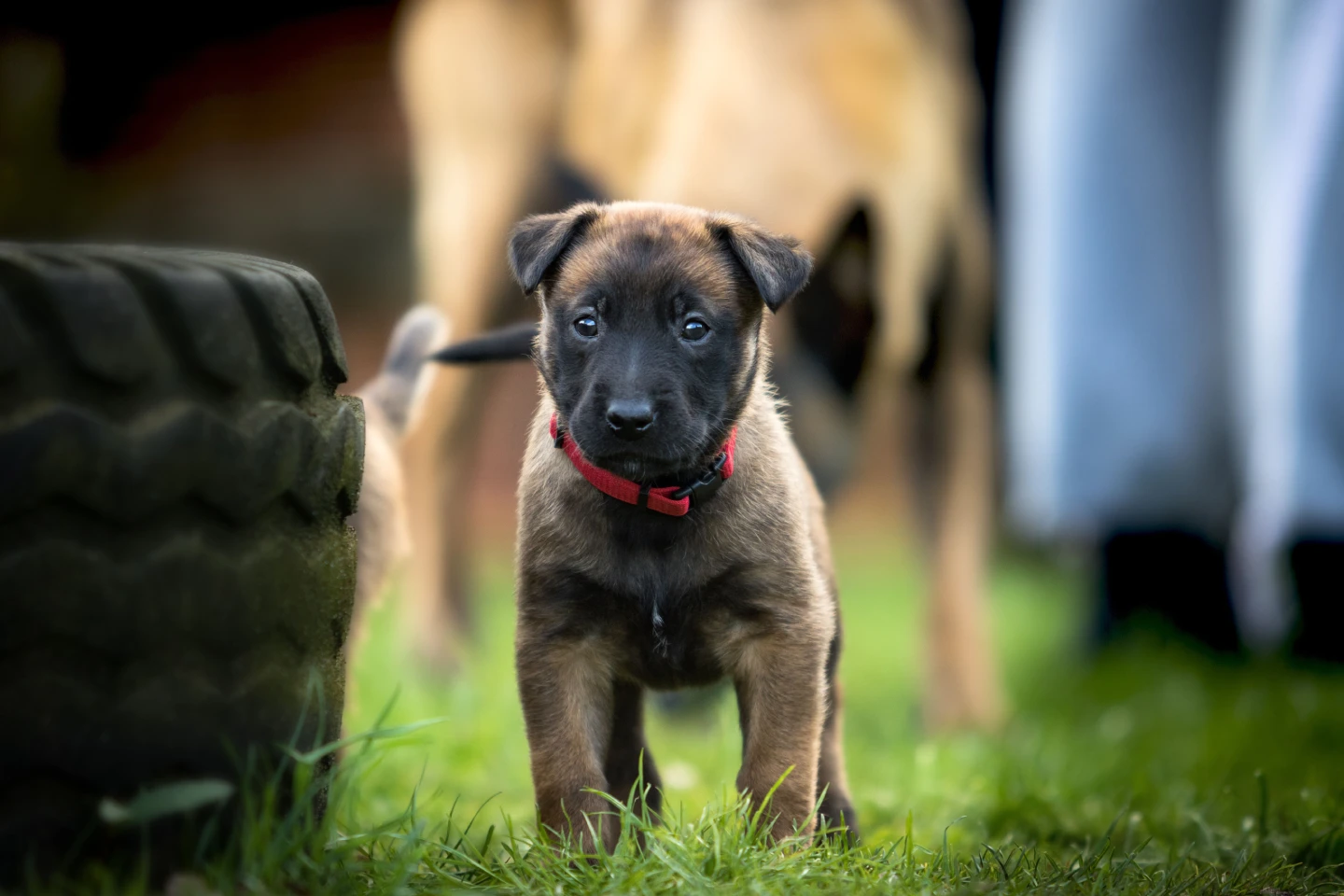
When Should You Start Training a Puppy?
One of the most common questions we hear from new puppy owners is some version of: “Is it too early to start training?” The short answer is never. The longer answer is that puppies are learning from the moment they arrive in your home, whether you’re intentionally teaching them or not. The question isn’t really if you should start puppy training. It’s when and what.
Getting this right from the beginning makes everything easier. Getting it wrong — or waiting too long — creates habits that take significantly more time and effort to undo.
What Age Can You Start Training a Puppy?
Puppies can begin basic training as early as 7 to 8 weeks old. Their brains are already processing their environment and forming associations at this stage, so even simple exposure to new sights, sounds, and people counts as training.
Formal obedience work, like sit, down, come, and place, can start as soon as your puppy comes home. At 8 to 12 weeks, their attention spans are short, so keep sessions brief, around 5 minutes at a time, and end on a positive note. You’re not building a competition dog at this stage. You’re building a foundation of trust and responsiveness that every future command will rest on.
Why Starting Early Matters So Much
There’s a developmental window in puppies, roughly between 3 and 14 weeks of age, when they are most open to new experiences. This is called the socialization period, and it’s one of the most important phases in your dog’s life. What they encounter during this window, and how those encounters go, shapes their attitude toward the world for years to come.
A puppy who meets different people, hears different sounds, walks on different surfaces, and has consistently positive experiences during this window tends to grow into a confident, adaptable dog. One who misses this window, either through isolation or negative experiences, is more likely to develop fear-based reactions, anxiety, or reactivity later on.
This doesn’t mean that missing part of the socialization window dooms your dog. It does mean that the earlier you start, the more you’re working with your puppy’s natural development rather than against it.
What Should You Teach a Puppy First?
Start with the basics that will protect your puppy and make your daily life together manageable. These are the skills that pay dividends every single day:
1. Sit
Sit is usually the easiest command to introduce and gives you a reliable way to get your puppy’s attention and ask for calm behavior.
2. Come
Come (recall) is arguably the most important command you’ll ever teach, and it’s much easier to build a solid recall in a young puppy than to repair a broken one in an adult dog.
3. Place
Place teaches your puppy to go to a designated bed or mat and remain there calmly. This single command does more to manage hyperactivity and chaos in the home than almost anything else.
4. Leash manners
Leash manners should also start early. Pulling on leash is one of the most common complaints we hear from dog owners, and it’s a habit that’s almost entirely preventable if addressed in puppyhood.
5. Crate training
Crate training deserves its own mention. Done correctly, crate training gives your puppy a safe, calm space of their own and makes housebreaking significantly easier. Many dogs that develop separation anxiety later in life were never given the chance to learn that being alone is normal and okay.
Socialization Is Training Too
When people think about puppy training in Denver, they often picture obedience commands. But socialization is just as important, and it’s something that has to happen on a schedule whether you’re ready for it or not.
Introduce your puppy to a wide variety of people: men with beards, children, people in hats, people with umbrellas. Take them to different environments: parks, pet stores, busy sidewalks, quiet neighborhoods. Let them hear traffic, construction, dogs barking from behind fences. Let them experience different textures underfoot. The goal isn’t to overwhelm them. It’s to build a puppy that looks at new things with curiosity rather than fear.
Every positive new experience your puppy has during those early weeks is a deposit in the bank of their confidence.
What Happens If You Wait Too Long?
A lot of owners wait until their puppy is 6 months old before starting formal training. Sometimes they’re waiting until vaccinations are complete. Sometimes they figure the puppy just needs time to “settle in.” The problem is that by 6 months, your dog has already spent four or five months developing habits, some of which you’re about to spend real time and effort undoing.
Jumping up, pulling on leash, counter surfing, nipping, barking at the door, chasing the cat — these aren’t random puppy behaviors. They’re behaviors that got practiced and reinforced before any structure was in place. Training can absolutely address them, but prevention is always easier than correction.
The other thing that tends to happen is that owners underestimate how quickly a puppy grows into a medium or large dog. A 10-pound Golden Retriever puppy jumping up is cute. A 70-pound Golden Retriever jumping up is a problem. The behavior didn’t change. The dog just got bigger.
What Does Professional Puppy Training Look Like?
Professional puppy training isn’t about dominance or strict discipline. It’s about teaching your puppy how to communicate with you, and teaching you how to communicate with them. A good trainer will customize their approach to your puppy’s personality, energy level, and learning style.
At American Canine Academy, we’ve been working with puppies in the Denver area since 2005. We offer individual classes tailored to each stage of your puppy’s development, from beginner foundations through intermediate and advanced obedience. Our Canine Immersion program is also available for puppies who need a more intensive jump-start, giving them concentrated, professional training in a structured environment before coming home to you.
Whatever path you choose, the goal is the same: a puppy who understands what you’re asking, trusts you, and knows how to behave in the real world.
Puppy Training: A Practical Timeline
Every puppy is different, but here’s a general framework to work from:
7 to 12 weeks: Focus on socialization, positive exposure, crate training, housebreaking, and the very first building blocks of basic commands. Keep everything short, positive, and low pressure.
3 to 6 months: Build on foundations. Work on sit, down, stay, come, and place with increasing duration and distraction. This is the ideal time to address leash manners before they become deeply ingrained.
6 to 12 months: Puppies enter adolescence, and this is often when owners get frustrated. Focus dips, testing increases, and dogs that seemed to have commands down solid suddenly act like they’ve never heard the word “sit.” This is normal. Stay consistent, increase exercise, and consider professional guidance if you’re struggling.
12 months and beyond: Continued reinforcement and real-world practice. A well-trained one-year-old dog is the direct result of the work that went in during those first 12 months.
Common Puppy Training Mistakes to Avoid
Starting too late is the most common one, as covered above. But there are a few others worth mentioning.
- Inconsistency is probably the biggest day-to-day obstacle. If one person in the household allows the puppy on the couch and another doesn’t, your puppy isn’t getting mixed signals from the couch. It’s getting mixed signals about whether the rules mean anything. Everyone in the home needs to be on the same page.
- Repeating commands teaches your puppy to tune them out. If you say “sit, sit, sit” before the puppy complies, you’ve accidentally taught them that you’ll ask multiple times before anything happens. Say it once. Wait. If they don’t respond, encourage them into position and reward. Then practice.
- Ending on a bad note is an easy mistake to make. If your puppy fails at something, finish with a simpler command they know well so the session ends with success and a reward. You want your puppy to feel good about training, because enthusiasm for learning is one of your most valuable assets.
Frequently Asked Questions About Puppy Training
When should you start training a puppy?
You can begin basic training as early as 7 to 8 weeks old. As soon as your puppy comes home, they are learning from their environment. Intentional, positive training can start immediately with short, simple sessions.
Can an 8-week-old puppy learn commands?
Yes. An 8-week-old puppy can begin learning sit, come, and their name with short, reward-based training sessions. Attention spans are brief at this age, so keep sessions to 5 minutes and always end positively.
Is it too late to train a 6-month-old puppy?
No. Training can start at any age. A 6-month-old puppy is still very trainable. The earlier you start the better, but adolescent puppies can absolutely learn new behaviors with consistent, patient training.
What is the most important thing to teach a puppy first?
Recall (come when called) is arguably the most critical command for safety. Sit and place are also excellent early foundations because they give you reliable ways to redirect your puppy and ask for calm behavior.
What is the best puppy training method?
Reward-based training combined with clear, consistent boundaries is widely considered most effective. The goal is to build a puppy that wants to work with you because doing so is rewarding. Balanced training that also sets appropriate limits produces dogs that are both responsive and confident.
COMMENTS